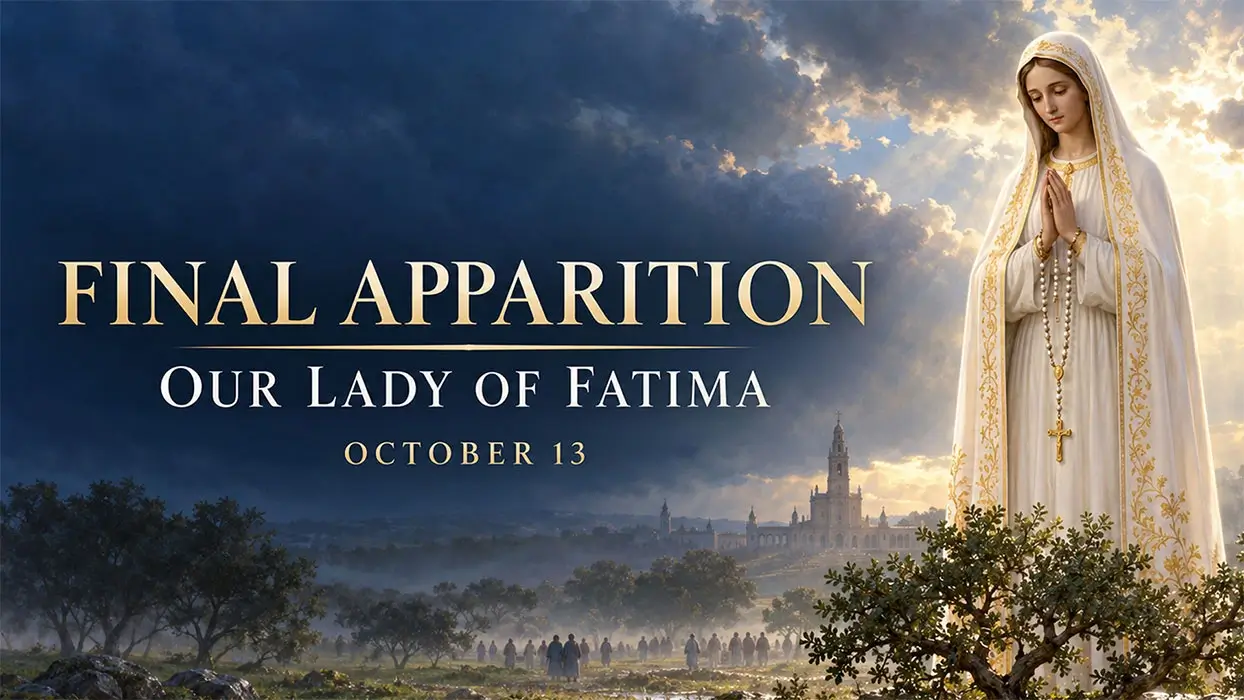
On October 13, Catholics remember the final apparition of Our Lady of Fatima in 1917. After months of rain, tens of thousands gathered at the Cova da Iria in Portugal. Some came in faith, others from curiosity or skepticism. The three young shepherds, Lucia dos Santos and her cousins Francisco and Jacinta Marto, returned as the Lady had asked.
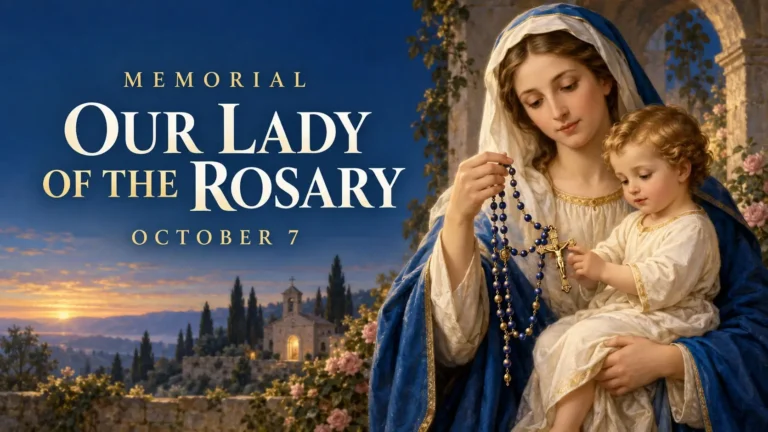
During this final apparition, Mary identified herself as the Lady of the Rosary. Her message remained direct: continue to pray the Rosary, amend our lives, ask forgiveness for sin, and return to God.
More than a century later, those words remain urgent.
Is October 13 a Universal Feast?
October 13 is widely observed by Fatima devotees and at shrines dedicated to Our Lady of Fatima. However, it is not a universal feast in the General Roman Calendar.
For editorial and liturgical accuracy, it is better described as the anniversary or commemoration of the final apparition of Our Lady of Fatima. The Church’s universal liturgical memorial of Our Lady of Fatima is celebrated on May 13, marking the first apparition in 1917.
This distinction does not diminish October 13. The date holds deep devotional significance because it completes the six-month sequence of apparitions and brings the central Fatima appeals into sharp focus.
For a fuller overview of the six apparitions, read The Apparitions of Our Lady of Fatima.
What Happened on October 13, 1917?
According to the official narrative from the Sanctuary of Fatima, a large crowd gathered at the Cova da Iria despite severe rain and muddy conditions.
Lucia asked the Lady what she wanted. Mary replied that a chapel should be built there in her honor and identified herself as the Lady of the Rosary. She again asked people to continue praying the Rosary every day.
She also called sinners to conversion and asked people not to offend God any more.
The crowd later reported an extraordinary solar phenomenon commonly known as the Miracle of the Sun. Accounts described the sun appearing to move, change colors, or approach the earth before returning to its normal position. The Church’s approval of the Fatima apparitions concerns their credibility and harmony with the faith. Catholics are not required to treat every reported detail in exactly the same way.
The most important question is therefore not whether we can explain every aspect of the event. It is whether we will respond to the Gospel-centered message of prayer, repentance, conversion, and peace.
“I Am the Lady of the Rosary”
Mary’s title at the final apparition connects Fatima directly with the contemplative prayer of the Church.
The Rosary leads us through the saving mysteries of Jesus Christ. In the Joyful Mysteries, we contemplate the Incarnation and hidden life of Jesus. The Luminous Mysteries follow his public ministry. The Sorrowful Mysteries keep us near him during his Passion. The Glorious Mysteries proclaim his victory over sin and death.
Mary does not ask us to stop at her. She asks us to look at Christ with her, receive his mercy, and obey him.
If you are beginning or returning to this prayer, use the step-by-step guide to praying the Rosary. You can also explore the Joyful, Luminous, Sorrowful, and Glorious Mysteries with their scriptural foundations.
Fatima and the Call to Conversion
The Vatican’s theological commentary on the Message of Fatima explains that private revelations must remain centered on Christ’s proclamation. Their purpose is not to add a new Gospel. They help believers live the Gospel more faithfully in a particular moment of history.
Fatima’s call to conversion and penance leads us back to the heart of Christianity.
Conversion is not simply feeling sorry. It means turning away from sin and changing the direction of our lives. It includes honest examination of conscience, sacramental Confession when needed, restitution for harm, forgiveness of others, and renewed obedience to God.
Penance is also more than dramatic sacrifice. It can take ordinary forms:
- completing a duty without complaining;
- accepting an inconvenience patiently;
- giving up something unnecessary;
- speaking kindly when irritation would be easier;
- offering time or resources to someone in need;
- praying for a person we find difficult.
These actions do not earn God’s love. They are responses to the mercy already offered in Jesus Christ.
Prayer for Peace
The Fatima apparitions occurred during the First World War. Mary repeatedly asked for the daily Rosary and prayer for peace.
Our own world remains marked by war, displacement, persecution, political hatred, broken families, and violence hidden inside homes. The appeal for peace is not outdated.
Praying the Rosary for peace should also affect our conduct. We cannot ask God for peace among nations while feeding contempt in our conversations. We cannot pray for reconciliation while refusing every opportunity to forgive.
Peace begins with conversion. It grows when we restrain cruel words, tell the truth without hatred, repair damaged relationships, protect the vulnerable, and refuse to treat another person as disposable.
The Rosary places these difficult responsibilities within the mysteries of Christ, who is our peace.
Reparation and the Love of God
The language of reparation can be misunderstood. It does not mean that God needs us to calm an unpredictable anger. God loved the world first and sent his Son for our salvation.
Reparation is our loving response to sin and its damage. We unite prayer, sacrifice, and works of mercy with the saving offering of Christ. We ask that hardened hearts be opened, wounded relationships be healed, and people return to grace.
This is why Fatima spirituality cannot be reduced to fear about future events. Fear may get attention, but it does not sustain Christian life. The message calls us to confidence in God, repentance, intercession for sinners, and faithful love.
The official Sanctuary of Fatima describes its mission as preserving the memory and message of the apparitions while welcoming pilgrims into a living journey of faith.
The Immaculate Heart of Mary
Fatima also drew attention to the Immaculate Heart of Mary. Her heart represents her complete love for God, her sorrow over sin, and her maternal concern for the salvation of souls.
Devotion to Mary’s Immaculate Heart must always lead us toward the Sacred Heart of Jesus. Mary teaches us to receive his Word, remain faithful beneath the Cross, and trust the victory of the Resurrection.
To pray with Mary is to ask for a heart made more like hers: attentive to God, compassionate toward sinners, courageous in suffering, and ready to serve.
A Practical Response for October 13
The best way to honor this anniversary is not simply to read about Fatima. Choose a concrete response.
- Pray at least five decades of the Rosary.
- Offer the Rosary for peace, conversion, and a specific person in need.
- Make an examination of conscience and plan to receive Confession if needed.
- Choose one simple act of penance or charity.
- Forgive someone, or take one responsible step toward reconciliation.
- Read a Gospel passage connected with the mystery you are praying.
- Ask Mary to help you follow Jesus more faithfully.
Holy Rosary Today also offers a Prayer to Our Lady of Fatima that can be prayed individually or with the family.
Prayer to Our Lady of Fatima
Our Lady of Fatima, Lady of the Rosary, you called the world to prayer, conversion, penance, and peace.
Help us listen to your maternal appeal with sincere hearts. Lead us to Jesus, obtain for us the grace to turn away from sin, and teach us to trust in his mercy.
Intercede for families divided by resentment, for people suffering through war and violence, for those who have abandoned prayer, and for sinners most in need of God’s mercy.
May the Rosary draw us more deeply into the life of Christ. May our sacrifices become acts of love, and may our daily choices help build peace.
Our Lady of Fatima, pray for us. Amen.
Sources
- Sanctuary of Fatima: Narrative of the Apparitions
- The Holy See: The Message of Fatima
- Sanctuary of Fatima: Places of the Apparitions
Related Articles