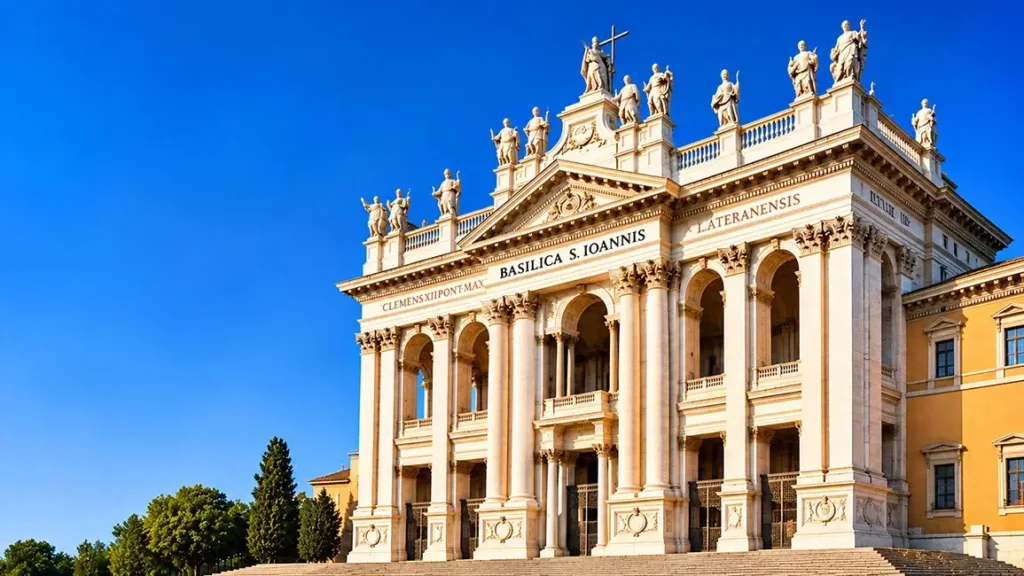
Every November 9, the Catholic Church celebrates the Feast of the Dedication of the Lateran Basilica in Rome, a celebration that reminds us of the unity of the Church and the presence of God among His people.
At first, it may seem unusual that Catholics throughout the world celebrate the dedication of a particular church building in Rome.
Yet this feast carries a meaning far beyond the walls of a basilica.
It reminds us that the Church is not merely a collection of buildings or institutions. The Church is a living community of believers, united in Jesus Christ and called to become a dwelling place of the Holy Spirit.
As we celebrate this feast, we are invited to renew our love for the Church, our respect for sacred places, and our commitment to living as faithful members of the Body of Christ.
In this article
What Is the Lateran Basilica?
The Lateran Basilica, officially known as the Archbasilica of the Most Holy Saviour and Saints John the Baptist and John the Evangelist at the Lateran, is one of the most important churches in Catholic Christianity.
Located in Rome, it serves as the cathedral of the Bishop of Rome, the Pope.
Many people assume that Saint Peter’s Basilica in Vatican City is the Pope’s cathedral. However, the Lateran Basilica holds that distinction.
As the cathedral of the Diocese of Rome, it contains the bishop’s cathedra, or teaching chair, which symbolizes his pastoral responsibility.
The Lateran Basilica is traditionally called the mother and head of all churches in Rome and throughout the world.
This title expresses its special place in the life of the Catholic Church.
According to the Holy See’s account of the basilica’s dedication, the church was dedicated on November 9, 324, during the pontificate of Pope Sylvester I.
Its dedication became a lasting sign of the Church’s freedom to worship publicly after centuries of persecution.
Why Do Catholics Celebrate the Dedication of the Lateran Basilica?
The dedication of a church is a sacred occasion.
During the dedication ceremony, a church building is solemnly set apart for the worship of God.
The altar is consecrated, and the building becomes a place where the faithful gather to celebrate the Eucharist, hear God’s Word, receive the sacraments, and pray together.
The Lateran Basilica holds special significance because it is the cathedral of the Pope.
By celebrating its dedication, Catholics express their communion with the Bishop of Rome and with the wider Church.
The feast reminds us that although we belong to different parishes, dioceses, cultures, and countries, we share one faith in Jesus Christ.
Our unity does not depend on geography.
It comes from our common Baptism, our participation in the sacraments, and our belonging to the Body of Christ.
This spirit of shared prayer is also reflected in the Holy Rosary Today prayer community, where people from different places come together in devotion to Jesus through the intercession of the Blessed Virgin Mary.
Though we may be separated by distance, our prayers unite us in faith.
The History of the Lateran Basilica
The history of the Lateran Basilica reaches back to the early fourth century.
Following the legalization of Christianity in the Roman Empire, Emperor Constantine supported the construction of a major church on the Lateran property in Rome.
The basilica became an important center of Christian worship and episcopal ministry.
It was dedicated during the pontificate of Pope Sylvester I and became associated with the public life of the Church in Rome.
For centuries, the Lateran complex also served as a principal residence of the popes.
Over time, the basilica experienced fires, earthquakes, rebuilding, and major architectural changes.
The building visible today reflects different periods of restoration and artistic development.
Yet despite these changes, its spiritual significance has remained.
It continues to serve as the cathedral of Rome and a visible sign of communion within the Catholic Church.
Its history reminds us that church buildings may experience damage, change, and restoration, but the mission of the Church continues through the faithfulness of God’s people.
The Church Is More Than a Building
One of the most important lessons of this feast is that the Church is not simply a physical structure.
Church buildings are sacred because they are dedicated to God and serve as places of worship.
But the deeper reality of the Church is found in the people whom God gathers into communion with Himself.
Through Baptism, we become members of Christ’s Body.
Through the Holy Eucharist, we are nourished by His presence.
Through the Holy Spirit, we are called to grow in holiness and serve one another.
The Catechism of the Catholic Church teaches that the Church is both a visible community and a spiritual reality.
We need sacred places where we can gather in prayer, but our Christian calling continues beyond the church doors.
Our faith should shape the way we live at home, at work, and within our communities.
When we practice forgiveness, compassion, generosity, and patience, we allow the love of Christ to become visible in our daily lives.
Jesus Christ Is the True Temple
The Gospel proclaimed on this feast is taken from John 2:13–22.
In this passage, Jesus enters the Temple in Jerusalem and finds merchants and money changers conducting business within its sacred precincts.
He drives them out and challenges the misuse of His Father’s house.
When questioned about His authority, Jesus speaks of the temple being raised again in three days.
Saint John explains that Jesus was speaking about the temple of His Body.
This teaching reveals something essential about our faith.
Jesus Christ is the true meeting place between God and humanity.
Through His death and Resurrection, He opens the way to eternal life.
The sacredness of our churches comes from their relationship to Christ, especially through the celebration of the Eucharist.
A beautiful church can lift our hearts toward heaven, but its deepest purpose is to lead us into communion with the Lord.
The Lateran Basilica reminds us that every Catholic church should direct our attention to Jesus Christ, the foundation of our faith.
Scripture Readings for November 9, 2026
The readings for the Feast of the Dedication of the Lateran Basilica invite us to reflect on God’s presence, the holiness of His people, and the life-giving power of His grace.
The readings are:
- First Reading: Ezekiel 47:1–2, 8–9, 12
- Responsorial Psalm: Psalm 46:2–3, 5–6, 8–9
- Second Reading: 1 Corinthians 3:9c–11, 16–17
- Gospel: John 2:13–22
First Reading: Ezekiel 47:1–2, 8–9, 12
The prophet Ezekiel describes water flowing from the temple, bringing life and healing wherever it goes.
This vision presents the temple as a place from which God’s blessings flow outward.
The water restores what was lifeless and brings abundance to the land.
For Christians, this image can remind us of the life-giving grace that flows from Jesus Christ.
Through Him, we receive the gift of salvation and the renewal of our hearts.
As members of the Church, we are also called to become instruments of God’s healing presence.
Our faith should not remain confined to personal prayer.
It should inspire us to bring kindness, mercy, and hope to the people around us.
Responsorial Psalm: Psalm 46
Psalm 46 reminds us that God is our refuge and strength.
The psalm presents the Lord as the source of security for His people, even when the world around them is uncertain.
This message is especially meaningful when we reflect on the long history of the Lateran Basilica.
Buildings may be damaged or rebuilt, and human circumstances may change, but God’s faithfulness remains.
Our hope rests not in earthly structures but in the Lord who dwells among His people.
Second Reading: 1 Corinthians 3:9c–11, 16–17
Saint Paul teaches that Jesus Christ is the foundation upon which the Church is built.
He also reminds believers that they are God’s temple and that the Holy Spirit dwells among them.
This passage challenges us to consider how we live our Christian vocation.
If we belong to God, then our words, choices, relationships, and actions should reflect His holiness.
We are called to protect the dignity of others, strengthen our communities, and build our lives upon Christ.
The Church becomes a more faithful witness to the Gospel when its members seek holiness together.
Gospel: John 2:13–22
In the Gospel, Jesus cleanses the Temple and speaks of His Body as the true temple.
His actions reveal His deep concern for the holiness of His Father’s house.
They also invite us to examine the condition of our own hearts.
Have we allowed distractions, selfishness, or resentment to weaken our relationship with God?
Do we approach prayer with sincerity and reverence?
Are we willing to allow Christ to renew what has become spiritually neglected?
The Gospel reminds us that conversion is not simply about outward appearances.
God desires hearts that are open to His grace.
Through prayer, repentance, and the sacraments, we can continually return to Him.
For those who wish to spend more time reflecting on Scripture, Verse Buddy’s Bible verse archive offers daily passages, reflections, and prayers that encourage a deeper relationship with God’s Word.
What Does This Feast Teach Us About the Catholic Church?
The Dedication of the Lateran Basilica offers several lessons for our Christian lives.
1. We Belong to One Church
Catholics throughout the world share one faith, even though we worship in different languages and communities.
The Lateran Basilica serves as a visible reminder of our communion with the Bishop of Rome.
2. Jesus Christ Is Our Foundation
The Church does not exist for its own glory.
Its mission is to proclaim Jesus Christ and lead people into communion with Him.
3. Our Parish Churches Are Sacred Places
Our local churches are more than familiar buildings.
They are places where we encounter Christ through the Eucharist, hear His Word, and receive the sacraments.
4. We Are Called to Become Living Temples
Through Baptism, we receive a calling to holiness.
Our lives should reflect the presence of the Holy Spirit through faith, charity, and obedience to God.
5. Prayer Strengthens Our Communion
When we pray for the Church, our parish communities, and one another, we participate in the spiritual life of the Body of Christ.
Our prayers remind us that we do not walk the Christian journey alone.
Praying the Holy Rosary on the Feast of the Lateran Basilica
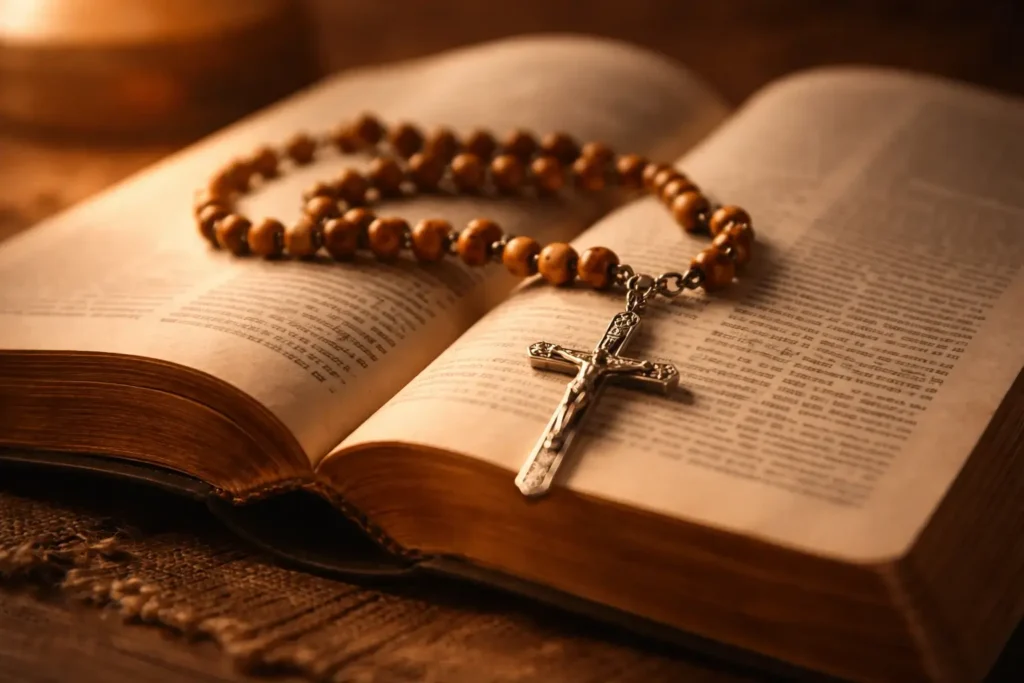
On Monday, November 9, 2026, we traditionally contemplate the Joyful Mysteries of the Holy Rosary.
These mysteries invite us to reflect on the Incarnation of Jesus Christ and the humble beginnings of His earthly life.
They are particularly meaningful on this feast because they remind us that God chose to dwell among humanity through His Son.
In the Annunciation, we contemplate Mary’s willingness to receive God’s Word.
In the Visitation, we see her bring Christ’s presence to Elizabeth.
In the Nativity, we celebrate the birth of the Savior.
In the Presentation, Jesus is brought to the Temple.
And in the Finding of Jesus in the Temple, we remember His devotion to His Father’s house.
As we pray, we can offer our intentions for the Pope, bishops, priests, religious communities, and all the faithful.
We can also remember parishes experiencing difficulties, communities divided by conflict, and those who feel distant from the Church.
For those wishing to continue in prayer, our Guided Rosary Today provides a prayer experience that automatically follows the appropriate mysteries for the day, allowing us to pray one bead at a time.
A Prayer for the Feast of the Dedication of the Lateran Basilica
Heavenly Father,
On this Feast of the Dedication of the Lateran Basilica, we give You thanks for the gift of Your Church and for the countless generations of believers who have gathered to worship You in faith.
We praise You for calling us into one family through Jesus Christ, Your Son.
Though we come from different places and carry different experiences, You unite us through Baptism and nourish us through the Holy Eucharist.
Lord, help us remember that the Church is more than the buildings in which we gather.
It is the community of Your people, called to live in holiness and love.
May our churches always remain places of reverence, welcome, prayer, and reconciliation.
We pray for the Holy Father, our bishops, priests, deacons, and all who serve Your people.
Grant them wisdom, courage, humility, and steadfast faith.
Strengthen those who carry the responsibilities of pastoral leadership, especially when they face difficulties or discouragement.
We remember our parish communities and the families who gather each week to celebrate the Holy Eucharist.
May our worship deepen our love for You and inspire us to serve one another with generosity.
Forgive us for the times we have contributed to division through harsh words, resentment, pride, or indifference.
Teach us to build bridges of understanding and to seek reconciliation wherever relationships have been wounded.
Lord Jesus, You are the true temple and the foundation of our faith.
Cleanse our hearts of whatever prevents us from drawing closer to You.
Renew our desire for prayer, strengthen our trust in Your mercy, and help us remain faithful to Your teachings.
Holy Spirit, dwell within us and guide our daily lives.
May our thoughts, words, and actions reflect the holiness to which we have been called.
Blessed Virgin Mary, Mother of the Church, we ask for your loving intercession.
Help us remain close to your Son and faithful to the Church He established.
May we become living witnesses of Christ’s love in our homes, parishes, workplaces, and communities.
And when we encounter those who are lonely, suffering, or struggling in faith, may we respond with compassion rather than judgment.
Heavenly Father, continue to build Your Church upon the foundation of Jesus Christ.
May our unity grow stronger, our faith become deeper, and our love for one another become more sincere.
Through Christ our Lord.
Amen.
Mary, Mother of the Church, pray for us.
How Can We Celebrate the Dedication of the Lateran Basilica?
We can observe this feast in several meaningful ways.
Attend Holy Mass. If possible, participate in the Eucharist and give thanks for the gift of the Church.
Pray for the Pope and our bishops. Ask God to strengthen those entrusted with guiding His people.
Visit our parish church. Spend a few moments in quiet prayer, remembering the sacredness of the place where we gather to worship.
Reflect on our Baptism. Renew our commitment to living as members of Christ’s Body.
Practice reconciliation. Reach out to someone with whom we have experienced conflict or misunderstanding.
Pray the Holy Rosary. Entrust the needs of the universal Church and our local communities to Jesus through Mary’s intercession.
These simple practices can help us experience the deeper meaning of the feast.
A Closing Reflection: Becoming a Dwelling Place for God
The Lateran Basilica has stood as a witness to the Christian faith for many centuries.
Its history reminds us of the sacrifices, prayers, and perseverance of generations who came before us.
Yet the greatest lesson of this feast is not found only in its ancient walls.
It is found in the invitation God extends to each of us.
He calls us to become holy.
He invites us to build our lives upon Jesus Christ.
He asks us to become instruments of His love in a world that often experiences division, loneliness, and uncertainty.
Our parish churches remain sacred places where we gather to encounter the Lord.
But when we leave those churches, our calling continues.
We are sent into our families, workplaces, and communities to carry the light of Christ.
As we celebrate the Dedication of the Lateran Basilica, may we renew our gratitude for the Church and our commitment to living faithfully within it.
May our hearts become more welcoming to God’s presence.
May our communities become stronger in charity.
And may our lives reflect the love of Jesus Christ, who continues to dwell among His people.
Related Articles