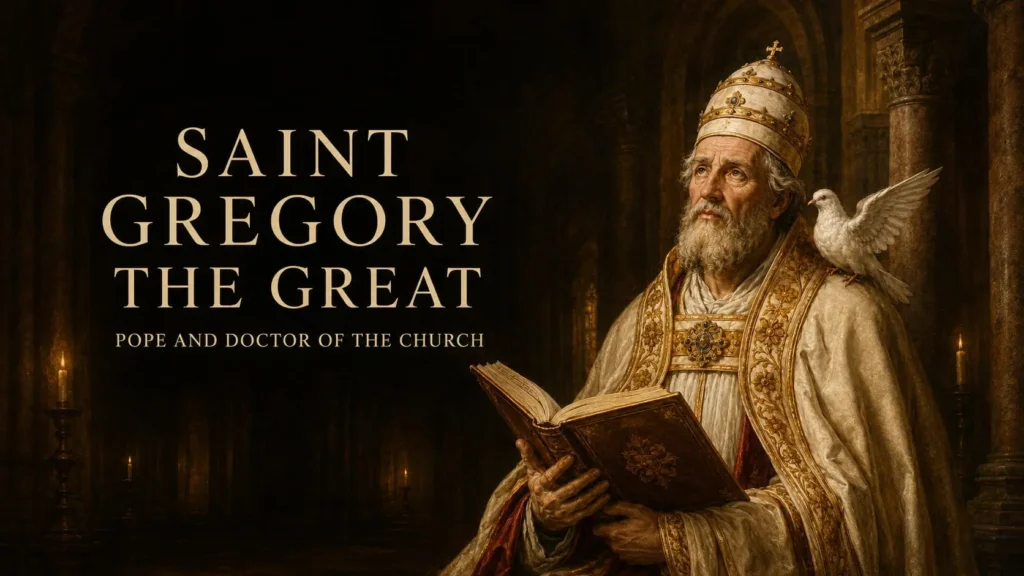
On September 3, the Church celebrates the Memorial of Saint Gregory the Great, Pope and Doctor of the Church. He is remembered as a gifted teacher, an attentive pastor, a defender of the poor, and one of the most influential popes in the history of the Church.
Yet the greatness of Saint Gregory was not based simply on his position or accomplishments. It came from his willingness to place his abilities at the service of Christ and His people.
His life invites us to consider a simple question: How are we using what God has entrusted to us?
From Public Office to a Life of Prayer
Gregory was born in Rome around the year 540 into a respected Christian family. He received an excellent education and eventually served as Prefect of Rome, one of the city’s highest civil offices. He possessed the intelligence, discipline, and administrative ability needed for public leadership.
But Gregory longed for a life centered more completely on God. After leaving public office, he transformed his family home into a monastery and embraced a life of prayer, study, and simplicity.
He did not remain hidden there forever. The Church soon called him into wider service. He was ordained a deacon, served as a papal representative in Constantinople, and was eventually elected pope in 590.
Gregory did not seek the papacy. He understood the weight of caring for the Church and felt the tension between the contemplative life he loved and the demanding responsibilities now placed before him. Still, he accepted the call.
His response teaches us that God’s will does not always lead us toward the life we would choose for ourselves. Sometimes faithfulness means leaving what feels peaceful and familiar to serve where we are most needed.
A Shepherd Who Saw Leadership as Service
Saint Gregory became pope during a troubled period. Rome faced disease, hunger, political instability, and the continuing effects of war. People needed more than religious instruction. They needed food, protection, organization, and hope.
Gregory responded as both a pastor and a capable administrator. He organized assistance for the poor, managed Church resources carefully, and worked to protect those who were vulnerable. He understood that preaching the Gospel could never be separated from caring for people in their real suffering.
Although he held the highest pastoral office in the Western Church, he described himself as a servant of the servants of God. For Gregory, authority was not permission to place himself above others. It was a responsibility to carry their needs.
This remains an important lesson for parents, clergy, employers, ministry leaders, and anyone entrusted with responsibility. Christian leadership is measured neither by visibility nor control. It is measured by faithfulness, humility, and the good we seek for those placed in our care.
A Teacher Who Helped People Live the Gospel
Gregory was also a gifted writer and teacher. His works helped form generations of Christians, especially those called to pastoral ministry. He taught that a shepherd must not merely speak about holiness but strive to live what he teaches.
This is one reason the Church honors him as a Doctor of the Church. His teaching did more than explain Christian doctrine. It helped believers apply the Gospel to prayer, moral decisions, leadership, and daily life.
Gregory also had a deep love for Sacred Scripture. He approached the Word of God not as information to master, but as a living word through which God continues to form His people. His example encourages us to read Scripture patiently and prayerfully, allowing it to challenge our habits and shape our actions.
Knowledge of the faith is valuable, but knowledge alone is not the goal. What we learn must lead us toward love of God and service to our neighbor.
What Saint Gregory Teaches Us Today
Most of us will never hold an office like Gregory’s, but the spiritual decisions within his life are familiar.
We may be given responsibilities we did not expect. We may long for quiet while our family, parish, or community needs our attention. We may feel unqualified for what God is asking. We may also be tempted to treat our gifts as personal achievements rather than tools for serving others.
Saint Gregory reminds us that holiness is often found in accepting the work directly before us. It may be caring for a sick relative, guiding our children, supporting a struggling friend, serving faithfully in our parish, or completing an unnoticed duty with love.
The important question is not whether the work appears impressive. The question is whether it is being offered to Christ.
True greatness is not found in being admired. It is found in becoming available to God.
A Prayer Through the Intercession of Saint Gregory the Great
Heavenly Father,
You called Saint Gregory the Great from a life of quiet prayer to serve Your Church as a faithful shepherd. Through his intercession, give us the humility to accept the responsibilities You entrust to us and the wisdom to use our gifts for the good of others.
Strengthen Pope Leo XIV, our bishops, priests, and all who serve Your people. Help them lead with courage, compassion, and fidelity to the Gospel.
Teach us to recognize Christ in the poor, the suffering, and those who depend upon our care. May our prayer deepen our love, and may our faith become visible through generous service.
Saint Gregory the Great, pray for us.
Amen.
Sources
- Pope Benedict XVI, Angelus on Saint Gregory the Great, September 3, 2006
- USCCB Daily Readings for the Memorial of Saint Gregory the Great, September 3, 2026
Related Articles