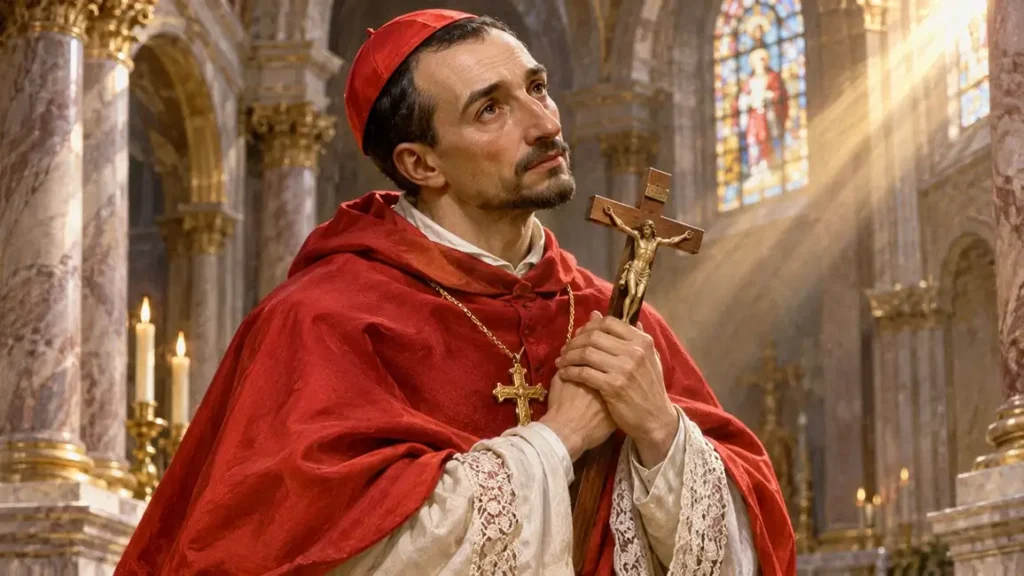
On November 4, the Catholic Church celebrates the Memorial of Saint Charles Borromeo, a devoted bishop, courageous reformer, and faithful shepherd who dedicated his life to serving God and His people.
Living during a difficult period in the Church’s history, Saint Charles worked tirelessly to strengthen the faith, improve the formation of priests, and restore the spiritual life of the Church.
Yet his holiness was not demonstrated only through leadership and reform.
It was also revealed through his compassion for the poor, his personal sacrifices, and his willingness to remain close to the sick and suffering during a devastating plague.
His life reminds us that true Christian leadership begins with humility and is fulfilled through service.
As we honor Saint Charles Borromeo today, we are invited to reflect on our own calling to holiness and the many opportunities God gives us to serve others with love.
Quick Facts About Saint Charles Borromeo
- Full Name: Carlo Borromeo
- Born: October 2, 1538
- Birthplace: Arona, Duchy of Milan, present-day Italy
- Died: November 3, 1584
- Place of Death: Milan, Italy
- Feast Day: November 4
- Ordained Priest: September 4, 1563
- Consecrated Bishop: December 7, 1563
- Archbishop of Milan: Appointed in 1560; consecrated in 1563
- Created Cardinal: January 31, 1560
- Canonization: November 1, 1610, by Pope Paul V
- Saint Type: Bishop, Cardinal
- Known For: Catholic Reformation, Council of Trent, priestly formation, religious education, and service during the plague
- Patronage: Bishops, seminarians, catechists, and spiritual directors
- Common Symbols: Cardinal’s robes, crucifix, book, and episcopal insignia
Who Was Saint Charles Borromeo?
Saint Charles Borromeo was born on October 2, 1538, in Arona, near Lake Maggiore in northern Italy.
He belonged to a wealthy and influential noble family. His uncle, Giovanni Angelo de’ Medici, later became Pope Pius IV.
Despite his privileged upbringing, Charles developed a deep commitment to prayer, education, and service to the Church.
He studied civil and canon law at the University of Pavia, where he earned a doctorate in both disciplines.
His intelligence and administrative abilities soon brought him significant responsibilities within the Church.
At a young age, he was appointed a cardinal and entrusted with important duties in Rome.
However, Charles gradually came to understand that his position was not an opportunity for personal privilege.
It was a responsibility to serve God and His people.
Following the death of his older brother, he chose to continue his vocation to the priesthood rather than leave ecclesiastical life to assume greater family responsibilities.
He was ordained a priest in 1563 and consecrated a bishop later that year.
As Archbishop of Milan, he would become one of the most influential Catholic reformers of the sixteenth century.
The detailed biography published by Vatican News highlights his dedication to the Church, his pastoral reforms, and his extraordinary charity toward the poor and sick.
Saint Charles Borromeo and the Reform of the Catholic Church
Saint Charles Borromeo lived during the Catholic Reformation, a period when the Church faced serious challenges and recognized the need for spiritual and institutional renewal.
He played an important role in the final stages of the Council of Trent, which addressed matters of Catholic doctrine, Church discipline, and pastoral responsibility.
The council emphasized the importance of proper priestly formation, faithful teaching, and responsible leadership.
Charles recognized that lasting reform required more than new regulations.
It required a genuine conversion of heart.
He believed that bishops and priests should lead by example, living lives of prayer, humility, discipline, and service.
As Archbishop of Milan, he worked to implement the reforms of the Council of Trent throughout his archdiocese.
He visited parishes, encouraged religious education, improved Church administration, and strengthened pastoral care.
His work demonstrated that authentic renewal begins when those entrusted with leadership seek holiness in their own lives.
The Saint Charles Borromeo Seminary provides an account of his involvement in the Council of Trent and his lasting contribution to Catholic priestly formation.
His Dedication to the Formation of Priests
One of Saint Charles Borromeo’s most important contributions was his commitment to the education and spiritual formation of priests.
He understood that priests carry a profound responsibility.
They are called not only to teach the faith but also to accompany God’s people through the joys, struggles, and uncertainties of life.
Charles promoted the establishment of seminaries where future priests could receive proper intellectual, spiritual, and pastoral formation.
He also encouraged existing clergy to deepen their prayer lives and remain faithful to their responsibilities.
For Saint Charles, priestly ministry was never meant to be a position of comfort or status.
It was a calling to serve Christ and His Church.
His dedication to priestly formation continues to influence Catholic seminaries today.
In a 1963 address commemorating the Council of Trent’s establishment of diocesan seminaries, Pope Paul VI reflected on the significance of this reform and its connection with Saint Charles Borromeo.
As we remember his example, we are encouraged to pray for our bishops, priests, seminarians, and all those discerning a vocation to religious life.
May they be strengthened in faith and guided by the Holy Spirit as they serve the Church.
Saint Charles Borromeo During the Plague of Milan
Perhaps one of the most moving examples of Saint Charles Borromeo’s holiness was his response to the plague that struck Milan in 1576.
As disease spread and fear overwhelmed the city, many people sought safety away from the affected areas.
Saint Charles chose to remain with his people.
He organized relief efforts, provided food and assistance to those in need, and offered spiritual comfort to the sick and dying.
He used his personal resources to support those suffering from the epidemic.
Rather than distancing himself from the vulnerable, he demonstrated the compassion of a shepherd who refused to abandon his flock.
His actions reflected the example of Jesus Christ, the Good Shepherd, who cares for His sheep.
The historical account published by Franciscan Media describes his commitment to serving the people of Milan during this difficult period.
Saint Charles reminds us that Christian charity becomes especially meaningful when it requires sacrifice.
His example continues to inspire those who care for the sick, including doctors, nurses, caregivers, and volunteers.
It also encourages us to remember those who suffer alone, those facing serious illnesses, and families struggling to care for loved ones.
The Humility of Saint Charles Borromeo
Although Saint Charles held positions of great authority, humility remained central to his spiritual life.
His episcopal motto was Humilitas, meaning humility.
This was more than a personal ideal.
It became a guiding principle of his ministry.
Charles understood that leadership in the Church should reflect the humility of Jesus Christ.
He sought to live simply, practice personal discipline, and remain attentive to the needs of others.
His life challenges us to reconsider how we understand success and greatness.
The world often measures greatness through wealth, influence, recognition, and power.
Christ teaches us that true greatness is found in love and service.
Saint Charles demonstrated this truth through his willingness to place the needs of others before his own comfort.
His example invites us to practice humility in our families, workplaces, parishes, and communities.
We may not hold positions of leadership, but we can still serve others through patience, kindness, forgiveness, and generosity.
The Scripture Readings for November 4, 2026
The Scripture readings for the Memorial of Saint Charles Borromeo invite us to reflect on faithful discipleship, obedience to God, and the sacrifices involved in following Jesus.
According to the USCCB daily Mass readings for November 4, 2026, the readings include Philippians 2:12–18, Psalm 27, and Luke 14:25–33.
First Reading: Philippians 2:12–18
In his Letter to the Philippians, Saint Paul encourages Christians to live faithfully and allow God’s grace to work within them.
He reminds the faithful that God is at work in their lives, helping them desire and accomplish what is pleasing to Him.
This reading reflects the spiritual journey of Saint Charles Borromeo.
Charles recognized that holiness required ongoing conversion, discipline, and cooperation with God’s grace.
His life reminds us that Christian faith must be expressed through our actions.
We are called to become witnesses of Christ through the way we live, speak, and serve others.
Responsorial Psalm: Psalm 27
Psalm 27 expresses confidence in God’s protection and guidance.
It reminds us that the Lord is our light and salvation.
Saint Charles lived through periods of uncertainty, opposition, and suffering.
Yet he continued to trust in God’s presence.
His example encourages us to seek the Lord when we face difficult decisions, personal struggles, or moments of discouragement.
Gospel: Luke 14:25–33
In the Gospel, Jesus speaks about the demands of discipleship.
He teaches that following Him requires commitment, sacrifice, and a willingness to place God above everything else.
These words are reflected in the life of Saint Charles Borromeo.
Although he came from a wealthy family and held positions of influence, he chose to dedicate his life to serving Christ and His Church.
His ministry required personal sacrifice, courage, and perseverance.
The Gospel invites us to examine our own priorities.
Are we willing to place God’s will above personal comfort?
Can we remain faithful when following Christ becomes difficult?
Saint Charles reminds us that discipleship is not always easy, but God’s grace strengthens those who sincerely seek Him.
What Can We Learn from Saint Charles Borromeo?
The life of Saint Charles Borromeo offers lessons that remain meaningful for Catholics today.
1. Holiness Begins with Personal Conversion
Saint Charles understood that renewal must begin within the human heart.
Before we can help others grow closer to God, we must continually seek His grace in our own lives.
Prayer, repentance, and the sacraments help us remain faithful to this calling.
2. True Leadership Is an Act of Service
Charles used his authority to care for the people entrusted to him.
He reminds us that leadership should never be separated from humility, responsibility, and compassion.
Whether we lead a family, parish ministry, workplace, or community, we are called to serve with integrity and love.
3. Faith Must Be Expressed Through Charity
During the plague in Milan, Saint Charles demonstrated that love becomes visible through action.
He did not simply encourage others to care for the suffering.
He personally participated in serving them.
His example challenges us to recognize the needs of those around us.
4. Prayer Strengthens Our Mission
Saint Charles placed great importance on prayer and spiritual discipline.
He understood that meaningful service must remain rooted in a personal relationship with God.
Without prayer, even good works can become exhausting or lose their spiritual direction.
Through prayer, we receive the strength to continue serving faithfully.
5. Perseverance Is Part of Holiness
Saint Charles encountered opposition, hardship, and personal suffering throughout his ministry.
Yet he remained committed to his vocation.
His perseverance reminds us that difficulties do not necessarily mean we are moving away from God’s will.
Sometimes, faithfulness requires us to continue serving even when the path becomes difficult.
Praying the Holy Rosary on the Memorial of Saint Charles Borromeo
As we commemorate Saint Charles Borromeo on Wednesday, November 4, 2026, we traditionally meditate on the Glorious Mysteries of the Holy Rosary.
These mysteries remind us of Christ’s victory over death, the gift of the Holy Spirit, and the hope of eternal life.
They also encourage us to reflect on the grace that strengthened Saint Charles throughout his ministry.
As we pray, we can offer our intentions for the Church, our bishops and priests, those preparing for the priesthood, and all who dedicate their lives to serving others.
We can also remember healthcare workers, caregivers, and families facing illness or suffering.
Through the intercession of the Blessed Virgin Mary and Saint Charles Borromeo, may we grow in humility, courage, and faithful love.
Join our Catholic prayer community at Holy Rosary Today as we meditate on the Glorious Mysteries and entrust our intentions to Jesus through the intercession of His Blessed Mother.
A Prayer for the Memorial of Saint Charles Borromeo
Heavenly Father,
On this Memorial of Saint Charles Borromeo, we give You thanks for the example of a faithful shepherd who dedicated his life to serving Your Church.
Through his humility, courage, and compassion, we are reminded that true holiness is found in loving You and caring for one another.
Lord, we acknowledge the times when pride, fear, or personal comfort have prevented us from responding generously to Your call.
Forgive our weaknesses and renew our desire to serve You with sincere hearts.
Through the intercession of Saint Charles Borromeo, we pray especially for our bishops, priests, seminarians, and all those preparing for religious life.
Strengthen them in faith, protect them from discouragement, and guide them in their sacred responsibilities.
May they become faithful shepherds who lead Your people with wisdom, humility, and compassion.
We also remember those who are sick, those who suffer in silence, and the families who care for them.
Bless our doctors, nurses, caregivers, and all who dedicate themselves to relieving human suffering.
Blessed Virgin Mary, Mother of the Church, we ask for your loving intercession.
Help us follow the example of Saint Charles by placing prayer at the center of our lives and responding to the needs of others with generosity.
Lord Jesus, teach us to serve without seeking recognition, to remain faithful during difficulties, and to trust in Your grace when our strength is not enough.
May the witness of Saint Charles Borromeo inspire us to grow in holiness through the ordinary responsibilities of daily life.
Lead us closer to Your Sacred Heart, so that our words and actions may reflect Your mercy and love.
Through Christ our Lord. Amen.
Saint Charles Borromeo, pray for us.
How Can We Honor Saint Charles Borromeo Today?
We can honor Saint Charles Borromeo by following his example of prayer, humility, and service.
Attending Holy Mass, spending time in personal prayer, and reflecting on the Gospel are meaningful ways to observe his memorial.
We can also offer special prayers for priests, bishops, seminarians, and those discerning a religious vocation.
Another beautiful way to remember his life is through an act of charity.
We might visit someone who is sick, offer assistance to a struggling family, encourage someone experiencing discouragement, or support a charitable ministry in our parish.
These simple actions reflect the compassion that guided Saint Charles throughout his life.
We can also pray the Holy Rosary, asking the Blessed Virgin Mary to help us remain faithful to Christ.
A Closing Reflection: Holiness Through Humble Service
Saint Charles Borromeo lived during a time when the Church faced serious challenges.
Yet he did not allow those difficulties to weaken his commitment to Christ.
Instead, he responded through prayer, reform, sacrifice, and faithful service.
His life reminds us that holiness is not measured by the importance of our position or the recognition we receive.
It is revealed through our willingness to love God and serve others.
We may not be called to lead an archdiocese or guide major reforms within the Church.
But we are called to practice humility, compassion, and faithfulness in our daily lives.
We can encourage someone who feels forgotten.
We can pray for a priest who carries heavy responsibilities.
We can care for someone who is suffering.
We can choose forgiveness when resentment would be easier.
These small acts of love become meaningful offerings when they are united with Christ.
As we honor Saint Charles Borromeo today, may we remember that the renewal of the Church begins with hearts willing to be transformed by God’s grace.
Saint Charles Borromeo, faithful shepherd and servant of God, pray for us.
Our Lady, Mother of the Church, pray for us.
Related Articles