- Feast Day
- November 4
- Saint Types
- Bishop
- Patronage Details
- Catholic Reformation, Council of Trent, priestly formation, religious education, and service during the plague
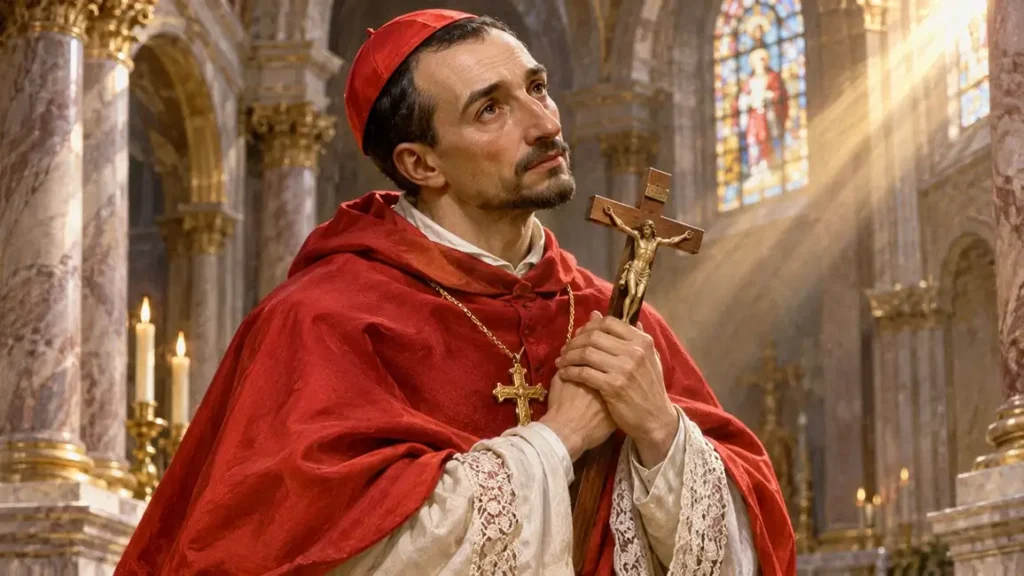
Saint Charles Borromeo was a Catholic bishop, cardinal, and Archbishop of Milan who became one of the most important leaders of the Catholic Reformation during the sixteenth century.
Born into a noble Italian family in 1538, he dedicated his life to strengthening the Church through faithful pastoral leadership, religious education, the formation of priests, and compassionate service to those in need.
He played a significant role in the final period of the Council of Trent and worked tirelessly to put its reforms into practice.
During the devastating plague that struck Milan in 1576, Saint Charles remained close to his people, organizing assistance for the sick, feeding the hungry, and encouraging the faithful through prayer.
His life reminds us that true Christian leadership is not measured by authority or recognition, but by humility, sacrifice, and loving service.
The Catholic Church celebrates his feast day on November 4.
Early Life and Family Background
Saint Charles Borromeo was born on October 2, 1538, in Arona, near Lake Maggiore in northern Italy.
He belonged to the influential Borromeo family, which held considerable wealth and political influence.
His father was Count Gilbert Borromeo, and his mother, Margherita de’ Medici, belonged to the prominent Medici family.
From an early age, Charles demonstrated a serious disposition toward religious life and study.
Although his family enjoyed wealth and privilege, he gradually developed a strong sense of responsibility toward the Church and those in need.
He studied law at the University of Pavia, where he earned a doctorate in civil and canon law in 1559.
His education prepared him for the important responsibilities he would later assume in the Church.
Yet his life would eventually demonstrate that knowledge and authority must be accompanied by prayer, humility, and personal holiness.
A Young Cardinal Called to Serve the Church
In 1559, Charles Borromeo’s uncle, Cardinal Giovanni Angelo de’ Medici, was elected pope and took the name Pius IV.
Soon afterward, the young Charles was called to Rome to assist in the administration of the Church.
In January 1560, at just twenty-one years of age, he was created a cardinal.
He received significant responsibilities in the Roman Curia and became one of Pope Pius IV’s most trusted collaborators.
Although his rapid advancement reflected the family connections common in Church leadership at that time, Charles eventually became known for his personal discipline, dedication, and commitment to reform.
He gradually moved away from the comforts associated with his noble upbringing.
Rather than using his position for personal gain, he increasingly devoted his time and resources to serving the Church.
Following the death of his older brother, Charles faced pressure to continue the family line. Instead, he chose to pursue his vocation more fully.
He was ordained a priest in 1563 and consecrated a bishop later that year.
His decision reflected a deepening commitment to a life of prayer, sacrifice, and pastoral service.
Saint Charles Borromeo and the Council of Trent
Saint Charles Borromeo played an important role in the final period of the Council of Trent, one of the most significant councils in Catholic history.
The council, held in several sessions between 1545 and 1563, addressed doctrinal questions and the need for reform within the Church.
As a close collaborator of Pope Pius IV, Charles helped support the council’s continuation and completion.
He also contributed to the administrative work required to implement its decisions.
The reforms of the Council of Trent emphasized the importance of proper priestly formation, religious education, sacramental discipline, and faithful pastoral leadership.
Saint Charles believed these reforms should not remain merely written instructions.
They needed to transform the daily life of the Church.
He worked to improve the education of priests, strengthen the administration of dioceses, and encourage bishops to remain attentive to the spiritual needs of their people.
His efforts helped shape Catholic pastoral life for generations.
Archbishop of Milan and Reformer of the Church
Saint Charles Borromeo became Archbishop of Milan during a period when the Church faced serious challenges.
Many parishes needed stronger pastoral leadership, and religious education required improvement.
Some clergy had neglected their responsibilities, while many ordinary Catholics lacked opportunities for systematic instruction in the faith.
Charles approached these problems with determination.
He conducted pastoral visits, organized diocesan synods, encouraged regular preaching, and worked to improve the spiritual formation of priests.
He supported the establishment of seminaries to prepare future priests for faithful service.
He also encouraged the teaching of Catholic doctrine to children and adults.
Saint Charles believed that bishops should live among their people and lead through personal example.
He practiced fasting, prayer, simplicity, and charitable giving.
His reforms sometimes met strong resistance from those unwilling to change established practices.
Nevertheless, he continued his work with perseverance.
His life teaches us that genuine renewal begins with personal conversion and faithful attention to the responsibilities entrusted to us.
A Shepherd During the Plague of Milan
One of the most remarkable periods of Saint Charles Borromeo’s ministry occurred during the plague that struck Milan in 1576.
The epidemic caused widespread suffering, fear, and death.
Many people fled the city, including members of the governing authorities.
Saint Charles chose to remain with his people.
He organized charitable assistance, provided food and supplies, and helped coordinate care for the sick and vulnerable.
He used his personal resources and Church property to support those affected by the epidemic.
He also encouraged priests to minister to the spiritual needs of the suffering while taking practical steps to assist the community.
During this difficult period, Saint Charles led public acts of penance and prayer, including processions conducted under the conditions of the time.
His actions reflected his conviction that the Church must remain close to those who suffer.
Rather than abandoning his responsibilities during a crisis, he demonstrated the courage and compassion of a faithful shepherd.
His example remains especially meaningful for healthcare workers, priests, caregivers, and families who accompany the sick.
Saint Charles Borromeo and the Blessed Virgin Mary
Prayer was central to Saint Charles Borromeo’s life and pastoral ministry.
He encouraged the faithful to cultivate a deeper relationship with Jesus Christ through the sacraments, personal prayer, and devotion.
As a Catholic bishop of the sixteenth century, he lived within a rich tradition of devotion to the Blessed Virgin Mary.
He recognized the importance of Mary’s example of humility, obedience, and trust in God.
For Saint Charles, spiritual renewal required more than external reform.
It called for hearts transformed by God’s grace.
The Blessed Virgin Mary offers Christians a model of this faithful response to God.
Her words at the Annunciation, accepting God’s will with humility, remind us that holiness begins with openness to His grace.
As we reflect on Saint Charles Borromeo’s life, we can ask Mary to help us become more faithful disciples of her Son.
Saint Charles Borromeo and the Holy Rosary
Saint Charles Borromeo lived during an important period in the development of Catholic devotional life.
The sixteenth century saw renewed emphasis on catechesis, sacramental practice, and traditional forms of Catholic prayer.
The Holy Rosary was among the devotions promoted within the Church during this period.
In 1569, Pope Saint Pius V issued the apostolic constitution Consueverunt Romani Pontifices, which affirmed and encouraged the Rosary.
Saint Charles’ pastoral work shared the broader goal of helping Catholics deepen their faith through prayer and religious instruction.
Although his most extensively documented contributions concern diocesan reform, priestly formation, and care for the faithful, his spirituality remains relevant to Catholics devoted to the Holy Rosary.
The Rosary invites us to meditate on the life of Jesus Christ and to follow the example of the Blessed Virgin Mary.
Like Saint Charles, we are called to allow prayer to shape our actions.
Our devotion should lead us toward greater charity, patience, faithfulness, and concern for others.
A Life of Prayer, Discipline, and Sacrifice
Despite his demanding responsibilities, Saint Charles Borromeo maintained a disciplined spiritual life.
He devoted time to prayer, fasting, spiritual reading, and examination of conscience.
He believed that those entrusted with leadership in the Church must first seek holiness in their own lives.
His personal austerity became one of the defining characteristics of his ministry.
He frequently used his wealth and resources to assist those in need.
Saint Charles also understood the importance of the sacraments, especially the Holy Eucharist and Confession.
He encouraged priests to celebrate the sacraments reverently and to provide faithful pastoral care.
His example reminds us that spiritual strength is not found simply in being busy with religious activities.
It grows through a living relationship with Jesus Christ.
Prayer, sacrifice, and service must remain connected.
Opposition and an Attempt on His Life
Saint Charles Borromeo’s efforts to reform religious communities and Church institutions sometimes encountered intense opposition.
Some individuals resisted the discipline and changes he sought to introduce.
In 1569, a member of the Humiliati religious order attempted to assassinate him while he was praying.
A shot was fired at Charles, but he survived.
The incident did not cause him to abandon his mission.
Instead, he continued working for the spiritual renewal of the Church.
His perseverance demonstrated his commitment to the responsibilities God had entrusted to him.
Saint Charles reminds us that doing what is right may sometimes bring criticism, misunderstanding, or opposition.
Faithfulness requires courage, patience, and trust in God.
His Final Years and Death
The demanding responsibilities of Saint Charles Borromeo’s ministry gradually affected his health.
He continued conducting pastoral visits, guiding priests, encouraging religious education, and caring for the needs of the Archdiocese of Milan.
Despite increasing exhaustion, he remained devoted to his duties.
In October 1584, he traveled to the sacred mountain of Varallo for spiritual exercises.
Soon afterward, he became seriously ill.
Saint Charles Borromeo died in Milan on November 3, 1584, at the age of forty-six.
His funeral and the devotion that followed reflected the deep respect many Catholics held for his life and ministry.
On November 1, 1610, Pope Paul V canonized him.
The Catholic Church celebrates his feast day on November 4.
His remains are venerated in Milan Cathedral.
Today, Saint Charles Borromeo is remembered as a model of episcopal leadership, personal holiness, pastoral courage, and compassionate service.
Lessons We Can Learn from Saint Charles Borromeo
1. True leadership means serving others
Saint Charles used his position as archbishop to care for the spiritual and material needs of his people.
His example reminds us that authority should be exercised with humility, responsibility, and love.
2. Faith must be supported by prayer
Despite his many responsibilities, Saint Charles made prayer an essential part of his life.
We too need regular moments of silence and communion with God.
3. Remain close to those who suffer
During the plague in Milan, Saint Charles chose to remain with his people.
His courage challenges us to show compassion to the sick, elderly, lonely, and vulnerable.
4. Renewal begins with personal conversion
Saint Charles understood that meaningful reform requires individuals to examine their own lives and grow in holiness.
Before seeking to change others, we should first ask God to transform our own hearts.
5. Persevere when doing what is right
Saint Charles faced resistance and danger, yet he continued serving the Church.
His example encourages us to remain faithful even when our responsibilities become difficult.
Prayer to Saint Charles Borromeo
Saint Charles Borromeo, faithful bishop and devoted shepherd of God’s people, we ask for your intercession as we seek to grow in faith and holiness.
Pray for our Holy Father, bishops, priests, and all who serve the Church, that they may lead with wisdom, humility, courage, and compassion.
Intercede for those who are sick, especially those facing serious illness, and for the doctors, nurses, caregivers, and families who accompany them.
Help us to remain faithful in prayer, to seek spiritual renewal, and to serve others generously.
Teach us to place the needs of others before our own comfort and to persevere in doing God’s will, even during times of difficulty.
Through the loving intercession of the Blessed Virgin Mary, may we grow in devotion to Jesus Christ, find strength in the Holy Rosary, and bring His peace into our families and communities.
Saint Charles Borromeo, pray for us, that we may serve God with faithful and generous hearts.
Amen.
Frequently Asked Questions About Saint Charles Borromeo
When is the feast day of Saint Charles Borromeo?
The Catholic Church celebrates the feast day of Saint Charles Borromeo on November 4, the day following his death on November 3, 1584.
Who was Saint Charles Borromeo?
Saint Charles Borromeo was an Italian cardinal and Archbishop of Milan who became a leading figure in the Catholic Reformation during the sixteenth century.
What is Saint Charles Borromeo known for?
He is especially remembered for his role in implementing the reforms of the Council of Trent, improving priestly formation, promoting religious education, and caring for the people of Milan during the plague of 1576.
What is Saint Charles Borromeo the patron saint of?
Saint Charles Borromeo is recognized as a patron saint of bishops, seminarians, catechists, and spiritual directors.
What did Saint Charles Borromeo do during the plague?
During the plague in Milan in 1576, he remained with his people, organized charitable assistance, provided resources for the sick and poor, and encouraged prayer and spiritual care.
How did Saint Charles Borromeo reform the Church?
He strengthened diocesan administration, supported the establishment of seminaries, encouraged religious education, conducted pastoral visits, and worked to implement the reforms of the Council of Trent.
Did Saint Charles Borromeo survive an assassination attempt?
Yes. In 1569, an attacker associated with the Humiliati religious order fired a shot at him while he was praying. Saint Charles survived and continued his ministry.
When was Saint Charles Borromeo canonized?
Saint Charles Borromeo was canonized by Pope Paul V on November 1, 1610.
How is Saint Charles Borromeo connected to the Holy Rosary?
Saint Charles lived during a period when the Church strongly encouraged Catholic prayer and devotion, including the Holy Rosary. His emphasis on personal holiness, catechesis, and spiritual renewal complements the Rosary’s purpose of drawing believers closer to Jesus Christ.
Conclusion
Saint Charles Borromeo dedicated his life to strengthening the Catholic Church through prayer, reform, education, and compassionate pastoral service.
His courage during the plague of Milan, his commitment to the formation of priests, and his perseverance in the face of opposition continue to inspire Catholics today.
As we celebrate his feast day on November 4, may his example encourage us to deepen our prayer life, serve those who suffer, and remain faithful to Jesus Christ in all circumstances.
Through the intercession of the Blessed Virgin Mary, may we grow in humility, charity, and trust in God.
Saint Charles Borromeo, pray for us.