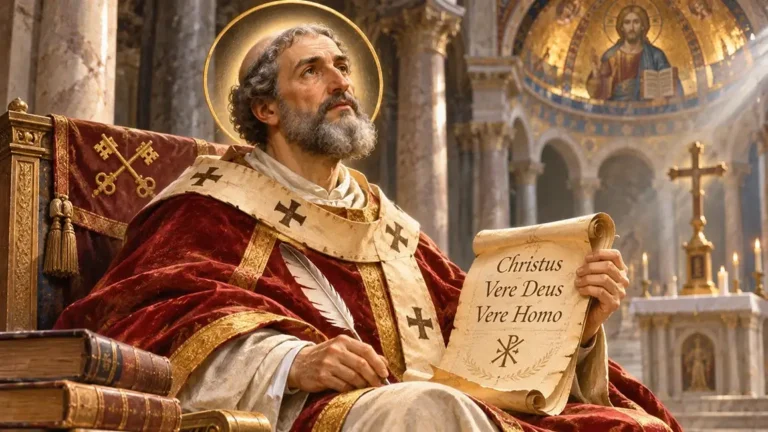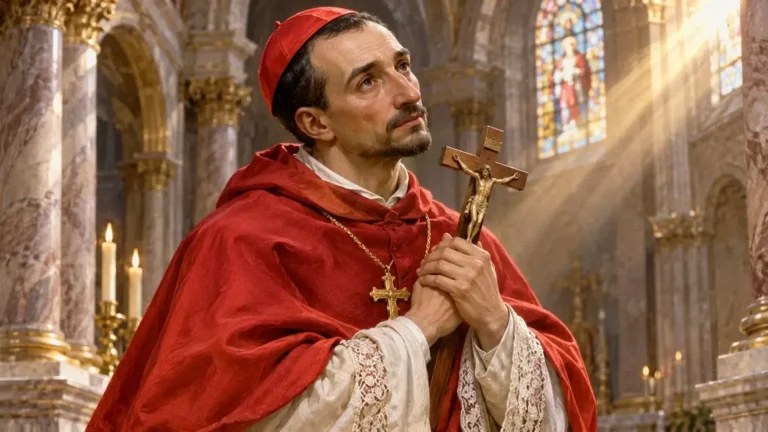


On November 11, the Catholic Church honors Saint Martin of Tours, a former Roman soldier who became a monk, bishop, and one of the most beloved saints of the early Church.
He is remembered for a simple act of compassion that changed his life: sharing his cloak with a poor man suffering in the cold.
What appeared to be an ordinary act of kindness became a profound encounter with Jesus Christ.
Saint Martin’s story reminds us that holiness is not always found in extraordinary achievements. Sometimes, it begins when we recognize someone else’s suffering and choose to respond with love.
His life invites us to reflect on a question that remains meaningful today:
When someone needs our help, are we willing to recognize Christ in them?
In this article
Quick Facts About Saint Martin of Tours
- Name: Saint Martin of Tours
- Born: Around AD 316 or 317
- Birthplace: Sabaria, Roman province of Pannonia, present-day Szombathely, Hungary
- Died: November 8, 397
- Place of Death: Candes, in present-day France
- Feast Day: November 11
- Religious Vocation: Monk and Bishop
- Bishop of Tours: From approximately 371 until his death
- Saint Type: Bishop, Confessor
- Known For: Sharing his cloak with a poor man, monastic life, missionary preaching, and service to the poor
- Patronage: Soldiers, conscientious objectors, beggars, and several communities and professions
- Common Symbols: Roman soldier on horseback, divided cloak, beggar, and episcopal vestments
- Early Biographer: Sulpicius Severus, author of Life of Saint Martin
Who Was Saint Martin of Tours?
Saint Martin of Tours was born around 316 in Pannonia, a region of the Roman Empire located in present-day Hungary.
His father was a Roman military officer, and Martin grew up in a family that did not practice Christianity.
As a young man, however, he became interested in the Christian faith.
Despite his desire to pursue a religious life, Martin entered the Roman army while still young, following the expectations associated with his father’s military career.
During his service, he developed a reputation for compassion and personal discipline.
He sought to live according to the teachings of Christ, even before receiving Baptism.
His journey eventually led him away from military life and toward a vocation centered on prayer, simplicity, and service.
According to the Vatican News biography of Saint Martin of Tours, his life became a remarkable witness to Christian charity and pastoral dedication.
Although Martin would eventually become a bishop, his most famous act of holiness took place long before he held any position of authority.
It happened when he encountered a stranger in need.
Saint Martin and the Beggar: The Story of the Cloak
One cold day, while serving as a Roman soldier near the city of Amiens in Gaul, Martin encountered a poor man who was inadequately clothed.
The man was suffering from the cold and asking for assistance.
Martin had little to offer.
Moved by compassion, he took his military cloak, divided it into two pieces, and gave half to the beggar.
He did not know the man’s name or circumstances.
He simply recognized that someone was suffering and needed help.
According to the traditional account, Martin later experienced a remarkable dream.
He saw Jesus Christ wearing the portion of the cloak he had given to the poor man.
The dream revealed the deeper meaning of his act of charity.
Martin had served Christ by serving someone in need.
The story reflects the teaching of Jesus in Matthew 25:31–46, where He identifies Himself with the hungry, thirsty, stranger, sick, and imprisoned.
Saint Martin’s compassion was not simply an act of generosity.
It was an expression of faith.
The account of the cloak and the dream is preserved in the Church’s tradition and retold in the Vatican’s biography of Saint Martin.
What Does the Cloak Teach Us Today?
We may never encounter a situation exactly like Saint Martin’s.
Yet opportunities to practice compassion appear throughout our daily lives.
We may meet someone struggling to provide food for their family.
We may know a neighbor who is sick, an elderly person who feels forgotten, or a friend who is carrying a burden silently.
Sometimes, the help we can offer seems small.
We may not have enough resources to solve someone’s difficulties completely.
But Saint Martin reminds us that we do not need to possess great wealth to practice charity.
We can share what we have.
We can offer our time, attention, encouragement, and prayers.
What matters is the love with which we respond.
From Roman Soldier to Servant of Christ
Saint Martin’s growing faith eventually led him to leave military service.
He desired a life dedicated more fully to Jesus Christ.
After leaving the army, Martin became associated with Saint Hilary of Poitiers, a bishop known for defending the Christian faith.
Under his spiritual guidance, Martin embraced a life of prayer and simplicity.
He later helped establish a monastic community near Poitiers, traditionally associated with Ligugé.
Martin’s monastic life emphasized prayer, discipline, poverty, and service.
He sought freedom from worldly ambition so that he could dedicate himself more completely to God.
His example reminds us that Christian conversion involves more than changing outward circumstances.
It requires a transformation of the heart.
Martin gradually allowed his faith to shape his priorities, decisions, and relationships.
In a 2007 Angelus reflection, Pope Benedict XVI recalled Saint Martin’s journey from military service to monastic life and his lasting witness to Christian charity.
His story encourages us to consider how God may be inviting us to grow in faith through the responsibilities and opportunities already present in our lives.
Saint Martin Becomes Bishop of Tours
Saint Martin’s reputation for holiness and compassion spread throughout the region.
In 371, he was chosen to become Bishop of Tours.
Although he preferred a quiet life of prayer, he accepted the responsibility of serving the Church.
As bishop, Martin continued practicing the simplicity that had shaped his monastic vocation.
He did not abandon his commitment to humility or personal sacrifice.
Instead, he brought these qualities into his pastoral ministry.
He traveled throughout the countryside, preached the Gospel, encouraged conversion, and cared for the spiritual needs of the people.
He also remained attentive to the poor, the sick, and those who were often overlooked.
Saint Martin demonstrated that being a bishop was not simply a position of authority.
It was a calling to become a shepherd who cared for God’s people.
His example remains meaningful for the Church today.
We are encouraged to pray for bishops, priests, and all those entrusted with pastoral leadership.
May they be strengthened in humility, compassion, and faithfulness as they guide the people of God.
A Bishop Who Chose Humility and Simplicity
Even after becoming bishop, Saint Martin remained deeply attached to prayer and a simple way of life.
He continued living close to his monastic community rather than pursuing personal comfort.
His example challenged the idea that leadership should be associated with wealth or privilege.
For Martin, authority was an opportunity to serve.
His humility reflected the example of Jesus Christ, who taught His disciples that greatness is found in becoming a servant.
Saint Martin’s life reminds us that holiness can grow when we become less concerned about recognition and more attentive to the needs of others.
This lesson applies not only to Church leaders but also to parents, workers, teachers, volunteers, and everyone entrusted with responsibilities.
We may not be called to lead a diocese, but we are called to serve faithfully wherever God has placed us.
True Christian leadership begins with love.
Saint Martin’s Compassion for the Poor and Suffering
Compassion remained central to Saint Martin’s life.
He understood that caring for the poor was not separate from his relationship with God.
It was one of the ways he expressed that relationship.
Throughout his ministry, Martin sought to protect vulnerable people and respond to human suffering.
His example reminds us that the Church’s mission includes both proclaiming the Gospel and demonstrating Christ’s love through practical charity.
Today, many people continue to experience poverty, illness, loneliness, and uncertainty.
Some struggle to provide for their families.
Others carry the emotional and physical burdens of serious illness.
We may not always know how to help.
Yet even small gestures of kindness can bring comfort and hope.
For families experiencing sickness or suffering, our Rosary for Healing offers an opportunity to entrust these burdens to Jesus through the intercession of the Blessed Virgin Mary.
Saint Martin reminds us that compassion begins when we refuse to ignore the suffering of another person.
Saint Martin of Tours and the Call to Peace
Saint Martin’s life also reflected a desire for peace.
He sought to follow Christ through prayer, charity, and reconciliation rather than through worldly ambition.
His commitment to peaceful service became especially meaningful during a period when the Roman world was experiencing significant political and religious tensions.
Martin is also remembered for opposing harsh treatment of people accused of religious error.
His example encourages us to defend truth without abandoning compassion.
Christian peace is not simply the absence of conflict.
It involves humility, patience, forgiveness, and respect for human dignity.
We may encounter disagreements within our families, workplaces, or communities.
In these moments, Saint Martin reminds us that faith should guide the way we treat one another.
We can seek reconciliation without surrendering our convictions.
We can speak truth without cruelty.
And we can pray for those with whom we disagree.
When conflict or uncertainty weighs upon our hearts, we can also turn to prayer through the Rosary for Peace, asking the Lord to bring healing to troubled relationships and communities.
Scripture Readings for November 11, 2026
The Scripture readings for Wednesday, November 11, 2026, invite us to reflect on God’s mercy, Christian goodness, and gratitude.
The readings are:
First Reading: Titus 3:1–7
Responsorial Psalm: Psalm 23:1b–3a, 3bc–4, 5, 6
Gospel: Luke 17:11–19
The readings are listed in the 2026 liturgical calendar and the daily Scripture resources of the USCCB.
First Reading: Titus 3:1–7
In his Letter to Titus, Saint Paul encourages Christians to practice gentleness, kindness, and readiness for good works.
He reminds believers that salvation comes through God’s mercy rather than through human achievements.
This teaching reflects the life of Saint Martin.
Martin did not help the beggar because he expected recognition.
He responded because compassion had become part of his Christian identity.
His act of charity reminds us that the grace we receive from God should inspire us to show mercy to others.
We are invited to become more patient, generous, and attentive to those around us.
Responsorial Psalm: Psalm 23
Psalm 23 presents the Lord as our loving Shepherd.
It reminds us that God guides, protects, and accompanies His people.
This image is especially meaningful as we remember Saint Martin, who became a shepherd of the Church.
As Bishop of Tours, he sought to care for those entrusted to him.
Yet he also recognized that he remained dependent upon the guidance of the Lord.
The psalm invites us to place our confidence in God, especially during moments of uncertainty.
When we feel overwhelmed, discouraged, or afraid, we can remember that the Good Shepherd does not abandon His flock.
Gospel: Luke 17:11–19
In the Gospel, Jesus heals ten people suffering from leprosy.
All ten receive healing, but only one returns to thank Him.
Jesus recognizes the faith and gratitude of the one who returned.
This Gospel reminds us that gratitude is an important part of our relationship with God.
We may spend much of our prayer time asking the Lord for help.
We bring our worries, illnesses, family difficulties, and personal intentions before Him.
Yet we are also invited to recognize the blessings already present in our lives.
Saint Martin’s life reflects this spirit of gratitude.
He responded to God’s grace through generosity and service.
His example encourages us to express thanksgiving not only through words but also through acts of love.
For more daily Bible readings, inspiring Scripture verses, and Catholic reflections, visit Verse Buddy and continue exploring God’s Word.
Five Lessons We Can Learn from Saint Martin of Tours
1. Recognize Christ in Those Who Suffer
Saint Martin’s encounter with the beggar reminds us that every person possesses dignity.
When we care for someone in need, we respond to Christ’s call to love our neighbor.
2. Give Generously, Even When We Have Little
Martin shared what he possessed.
His example reminds us that generosity is not measured only by the amount we give.
It is measured by the love behind our actions.
3. Remain Humble in Positions of Responsibility
As bishop, Martin continued living simply.
He teaches us that leadership should be guided by service rather than personal ambition.
4. Make Prayer the Foundation of Our Lives
Martin valued silence, prayer, and spiritual discipline.
His life reminds us that meaningful service must remain rooted in our relationship with God.
5. Practice Gratitude Through Action
The Gospel of the ten lepers reminds us to thank God for His blessings.
Saint Martin shows us that gratitude can become visible through compassion and generosity.
Praying the Holy Rosary on the Memorial of Saint Martin of Tours
On Wednesday, November 11, 2026, we traditionally pray the Glorious Mysteries of the Holy Rosary.
These mysteries invite us to contemplate the victory of Jesus Christ over death, the gift of the Holy Spirit, and the promise of eternal life.
As we reflect on Saint Martin’s example, we can offer each decade for a particular intention.
We can pray for those living in poverty, families experiencing financial hardship, the sick and suffering, and those who feel forgotten.
We can also pray for bishops, priests, and religious communities, asking that their ministry remain rooted in humility and love.
Through the Glorious Mysteries of the Rosary, we remember that the grace of the risen Christ continues to transform human lives.
If we are beginning or returning to this devotion, our guide to praying the Holy Rosary can help us follow the prayers and mysteries.
May the example of Saint Martin encourage us to offer our daily actions to God with generous hearts.
A Prayer for the Memorial of Saint Martin of Tours
Heavenly Father,
On this Memorial of Saint Martin of Tours, we give You thanks for the life of a faithful servant who recognized Your Son in the suffering of another person.
Through his compassion, humility, and generosity, we are reminded that love for You must be expressed through love for one another.
Lord, we acknowledge the times when we have overlooked those who needed our help.
Sometimes we become so occupied with our own responsibilities that we fail to recognize the burdens others carry.
At other times, we hesitate to give because we fear that what we have may not be enough.
Forgive our selfishness and renew our hearts.
Through the intercession of Saint Martin of Tours, grant us the grace to become more attentive to those who are poor, sick, lonely, or discouraged.
Help us share what we have with generosity, whether through material assistance, kind words, patient listening, or sincere prayer.
We remember especially families struggling to provide for their daily needs.
We lift up those who are unemployed, those facing financial difficulties, and those who feel forgotten by society.
May Your providence sustain them, and may we become willing instruments of Your compassion.
We also pray for our bishops, priests, and all who serve Your Church.
Following the example of Saint Martin, may they lead with humility, wisdom, and love.
Blessed Virgin Mary, Mother of Mercy, we ask for your loving intercession.
Teach us to recognize Jesus in those who suffer and to respond with the same generosity that Saint Martin demonstrated.
Lord Jesus, You are the Good Shepherd who never abandons His people.
Strengthen our faith when we become discouraged.
Teach us to live with gratitude for the blessings we receive and to share those blessings with others.
May the witness of Saint Martin inspire us to become more compassionate, more generous, and more faithful in our daily lives.
Through Christ our Lord. Amen.
Saint Martin of Tours, pray for us.
As we reflect on Saint Martin’s example of compassion and generosity, may we continue growing in faith through prayer. Join us in praying today’s Holy Rosary, where the appropriate mysteries are automatically selected each day to guide us in prayer.
How Can We Honor Saint Martin of Tours Today?
We can honor Saint Martin by following his example of practical charity.
We may begin by looking for someone who needs encouragement or assistance.
A family struggling with daily expenses, an elderly neighbor living alone, or a person recovering from illness may benefit from a simple act of kindness.
We can also donate clothing, food, or other necessities to people in need.
Saint Martin’s famous act of sharing his cloak reminds us that even ordinary possessions can become instruments of God’s love.
Another meaningful way to observe his memorial is through prayer.
We can attend Holy Mass, reflect on the Gospel, and offer the Holy Rosary for those who are suffering.
We can also pray for our bishops and priests, asking God to strengthen them in their ministry.
Above all, we can honor Saint Martin by allowing his example to influence the way we treat others.
A Closing Reflection: The Cloak We Are Called to Share
Saint Martin of Tours is remembered for giving half of his cloak to a poor man.
It was a simple gesture, but it revealed something extraordinary.
Martin recognized that another person’s suffering mattered.
He chose compassion instead of indifference.
Centuries later, his example continues to challenge us.
We may not have a cloak to divide, but we all possess something that can be shared.
We can offer our time.
We can extend forgiveness.
We can encourage someone who has lost hope.
We can help a person carrying a burden too heavy to bear alone.
And we can remember those who are suffering in our prayers.
Every act of sincere charity becomes an opportunity to reflect the love of Jesus Christ.
As we commemorate Saint Martin of Tours, may we become more attentive to the needs of those around us.
May our faith move beyond words and become visible through compassion.
And may we never forget that when we serve those who are suffering, we are responding to the love of Christ Himself.
Saint Martin of Tours, pray for us.
Our Lady, Mother of Mercy, pray for us.
Related Articles