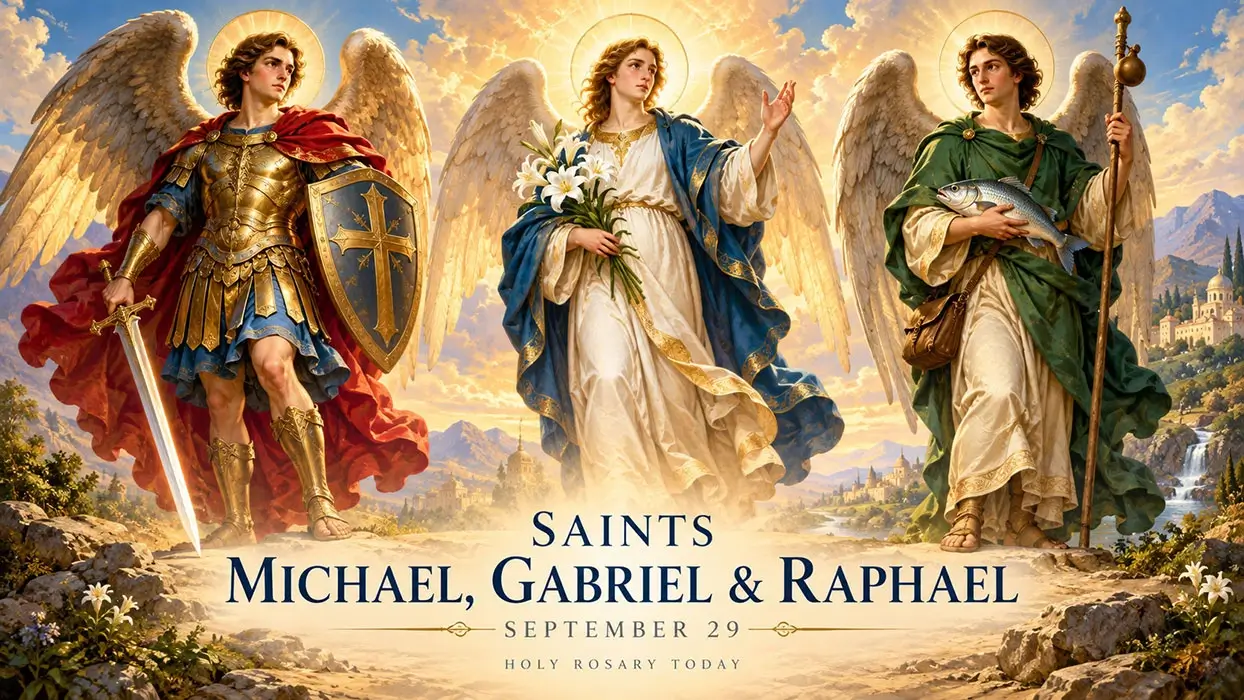
On September 29, the Church celebrates Saints Michael, Gabriel, and Raphael, the three archangels named in Sacred Scripture.
Their stories involve spiritual conflict, divine messages, healing, protection, and worship before God. Yet the feast is not meant to satisfy curiosity about angels. It directs our attention toward the Lord whom the angels serve.
Michael defends God’s people against evil. Gabriel announces God’s saving plan. Raphael accompanies and heals. Together, their biblical missions remind us that heaven is not distant from human need and that every true angelic ministry leads toward obedience, healing, and praise of God.
What the Church means by “angel”
The word angel describes a mission. It means messenger. Angels are spiritual creatures who serve God and carry out His will.
Catholic faith does not treat them as independent spiritual forces, sources of secret knowledge, or replacements for Jesus Christ. They are creatures, not gods. Their power comes from God, and their service belongs entirely to Him.
This distinction matters because popular culture often presents angels as sentimental symbols, anonymous energies, or beings we can command. Sacred Scripture gives a clearer picture. Angels worship God, deliver His messages, protect according to His will, and refuse worship for themselves.
The three archangels celebrated today are known by name because Scripture identifies them and reveals something of their missions.
Saint Michael: Who is like God?
Michael’s name is commonly understood as the question, “Who is like God?”
The Book of Revelation presents Michael and his angels fighting against the dragon. This image reveals a real spiritual conflict between obedience to God and rebellion against Him. Michael’s victory does not come from rivalry with God or power independent of Him. His very name proclaims that no creature can equal the Lord.
Devotion to Saint Michael is therefore a devotion rooted in humility and trust in God’s protection.
We may pray for Michael’s intercession when facing temptation, fear, spiritual discouragement, or threats to the good of our families and communities. This prayer should never become superstition or an obsession with evil. Christian life remains centered on Christ, the sacraments, Scripture, repentance, and works of charity.
Michael’s witness challenges the pride beneath every sin. Temptation often begins with the belief that we know better than God or can define good and evil for ourselves. Michael’s name answers that illusion: Who is like God?
When we resist sin, defend the vulnerable, speak truth with charity, and remain faithful under pressure, we take our place beneath God’s authority.
Saint Gabriel: Strength of God
Gabriel appears as the messenger entrusted with announcements central to salvation history.
In the Gospel of Luke, he announces the birth of John the Baptist to Zechariah. He is then sent to Nazareth, where he greets the Virgin Mary and announces that she will conceive and bear Jesus, the Son of the Most High.
Gabriel’s mission is inseparable from Mary’s response. The messenger delivers God’s word, and Mary receives it in faith: “May it be done to me according to your word.”
This encounter is especially close to everyone who prays the Rosary. In the first Joyful Mystery, the Annunciation, we contemplate the moment when Gabriel’s message and Mary’s consent meet within God’s saving plan.
Gabriel teaches us to listen before we speak. A messenger must receive the message faithfully and deliver it without changing it for personal comfort or approval.
This is important for every Christian. We are called to share the faith truthfully, but also with the reverence appropriate to something entrusted to us. The Gospel is not our personal brand or weapon against other people. It is the good news of Jesus Christ.
We can ask Gabriel’s intercession for preachers, catechists, parents teaching the faith, journalists, communicators, and anyone facing a difficult conversation that requires both truth and charity.
Saint Raphael: God heals
Raphael’s mission unfolds in the Book of Tobit, a book included in the Catholic canon of Scripture.
He accompanies Tobias on a dangerous journey, protects him, helps bring healing to Sarah, and directs the remedy through which Tobit’s sight is restored. Near the end of the story, Raphael reveals that he is one of the seven angels who stand before the glory of the Lord.
His name means “God heals.” This meaning protects us from misunderstanding his ministry. Raphael is not the source of healing. God is.
Raphael’s accompaniment is as important as the final healing. He walks with Tobias before Tobias understands who his companion truly is. The story reminds us that God’s providence can be active during a journey whose outcome we cannot yet see.
We may ask Raphael’s intercession for the sick, medical professionals, caregivers, travelers, married couples, and people seeking healing from emotional or spiritual wounds.
Prayer for healing should remain honest. We may ask boldly for recovery while recognizing that not every illness will be cured in the way we hope. Faith also seeks good medical care, follows responsible treatment, and supports those whose suffering continues.
God’s healing may include physical recovery, but it can also involve reconciliation, courage, freedom from resentment, endurance, or peace at the end of earthly life.
Three missions, one service
Michael, Gabriel, and Raphael have distinct missions, yet all three serve the same God.
Michael reminds us that God protects and that evil will not have the final word.
Gabriel reminds us that God speaks and invites a faithful response.
Raphael reminds us that God accompanies and heals.
Their feast gives us a balanced understanding of the spiritual life. We need courage against evil, attentiveness to God’s word, and trust during the work of healing. None of these stands alone.
Protection without truth can become fear. Truth without charity can become harshness. A desire for healing without obedience can become an attempt to control God. The archangels point us toward a life ordered beneath God’s will.
Angels and Christian worship
At every Mass, the Church joins the worship of heaven. In the Preface, we are invited to sing with the angels and saints: “Holy, Holy, Holy Lord God of hosts.”
This helps us understand the proper place of devotion to angels. They do not draw worship toward themselves. They join us in giving worship to God.
When we pray for their intercession, we are asking fellow servants of the Lord to assist us according to His will. Our relationship with God remains grounded in Jesus Christ, who alone is the mediator of salvation.
Healthy devotion produces humility, peace, obedience, and charity. If a spiritual practice leads toward fear, fascination with secret messages, attempts to identify a personal angel by name, or trust in occult methods, it has moved away from Catholic faith.
The safest path is also the richest: remain close to Christ through the Eucharist, Confession, Scripture, the Rosary, and faithful prayer.
The archangels and the Holy Rosary
Gabriel’s appearance at the Annunciation gives the Rosary an especially direct connection to this feast. Every Hail Mary begins with words drawn from his greeting and Elizabeth’s blessing.
Michael’s mission can be remembered as we pray for protection from temptation and perseverance in faith.
Raphael’s mission can shape our intentions for the sick, travelers, caregivers, marriages, and families searching for healing.
The Rosary keeps these devotions centered where they belong. We contemplate the life of Jesus with Mary and ask that every heavenly assistance lead us closer to Him.
Prayer to Saints Michael, Gabriel, and Raphael
Saint Michael the Archangel, defend us in spiritual battle. Help us resist temptation, reject pride, and remain faithful to God.
Saint Gabriel the Archangel, help us listen to the word of the Lord and communicate the truth with courage, humility, and charity.
Saint Raphael the Archangel, accompany the sick, travelers, caregivers, and all who seek healing. Guide them toward the help, strength, and peace God desires to give.
Holy Archangels, pray for our families and our Church. May your service remind us to worship God alone, trust His providence, and carry out His will.
Lead us always toward Jesus Christ, our Lord and Savior.
Amen.
A simple observance for today
Pray three short intentions:
- Ask Saint Michael’s intercession for someone facing temptation or danger.
- Ask Saint Gabriel’s intercession for someone discerning a difficult decision or sharing the faith.
- Ask Saint Raphael’s intercession for someone who is sick, traveling, or caring for another person.
Then pray one decade of the Rosary, asking that every part of your life may serve the will and glory of God.
Sources
Related Articles